Tuesday, April 20, 2010

A Heroic Rural Doctor in remote West Virginia


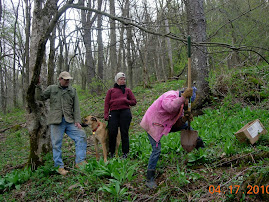
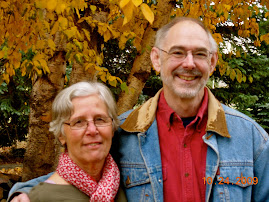
We reached the furthest point on our journey last weekend when we visited a person who had become very close to us over the last two years, but whom we had never met. We were introduced to this remarkable person, Dr. Susan Schmitt, by my brother Leon. Leon and his wife Lucy are avid folk-dancers, with a passion for contra dance. Every year they escape from the Eastern winter to dance with a convivial group on St Croix in the Caribbean. To my good fortune one of the couples who shares in this winter migration are Susan Schmitt and Doug Wagner, from Thomas, West Virginia.


When Leon visited me about three months after my abrupt and catastrophic encounter with a rare abdominal sarcoma called a GIST, he told me that that one of his dancing partners, a rural doctor in West Virginia, shared this unusual diagnosis. More remarkably, she was still vigorously alive, working as a solo rural family doc, and clicking her heels in St Croix five years after emergency surgery for the same condition. Although I initially thought he probably had misunderstood what she told him, when I was struggling with the side-effects of the chemotherapy for this rare cancer, I got Susan’s number from Leon and called her.


This was the beginning of a phone and e-mail friendship between two intense family doctors grappling with the reality of a bad disease, the side-effects of powerful medicine, and the various disruptions resulting from the fairly heroic surgery that had saved our lives, but altered both our anatomy and physiology. Each of us had discovered different strategies for coping with the disease, and the emotional and physical challenges that come with cancer and its treatment. We shared our discoveries with each other, used each other for informal consultations as new symptoms would crop up, and became a powerful two-person cancer support group.


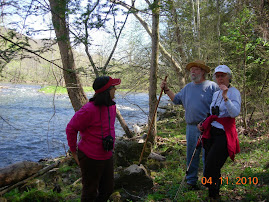
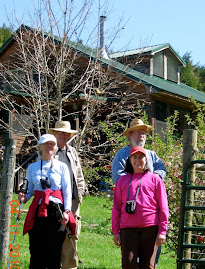
Thus when this road trip progressed from fantasy to a concrete plan, visiting Susan in West Virginia became the compass pole around which we designed our journey. So our furthest point from Seattle became Susan and Doug’s majestic house on Backbone Mountain just outside of Thomas.


As part of the visit we visited Susan in her half-time solo practice in Parsons, a struggling town that was almost wiped from the map during the flood of 1985. Susan has a devoted following in the town, but the economics of rural medicine in West Virginia are so challenging that the practice works only because Doug is her volunteer receptionist and book-keeper, while both of them share some of the janitorial duties. The other half of her practice is in an other small town a perilous hour and half drive from her home, plus stints of taking call at a Critical Access Hospital in yet another small town.


Susan has also experienced some of the vicious politics of rural West Virginia, including a vendetta that led to her being fired from a health center that she helped to create at the same time she was dealing with the challenges of trying to survive a lethal disease. Not only did she lose her health insurance – the chemotherapy that has kept both of us alive costs thousands of a dollars a month – but she was slapped with bogus criminal charges. She fought back vigorously and successfully, being completely exonerated of the trumped-up charges. Fortunately, she had enormous support from her patients and some segments of the professional community, and soon returned to what she loves and does best – taking care of sick people in West Virginia. Not only does she take care of disease, but she is committed to trying to prevent the enormous toll that obesity and diabetes take in West Virginia, and started a Wellness Center in Parsons that has since been adopted and supported by the city.


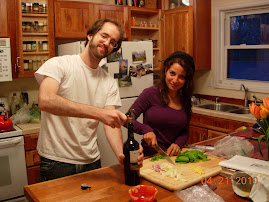
Although Susan and I had never met before this trip, we felt like we had known each other for years. Her example, her fortitude, and her fierce embrace of life have helped me enormously over the last two years. Her husband Doug and my wife Fernne share the ability to sustain us without draining of us our fierce uncompromising independence. It was a powerful weekend.


Thursday, April 15, 2010

Wandering in the Mountains of West Virginia

After the idyllic River Farm perched on Virginia’s Clinch River, we felt ready to tackle the mountains of West Virginia – or as Jim said, West “God Damn” Virginia. West Virginia has the distinction of being the only state to switch from the Confederacy to the Union during the Civil War, breaking away from Virginia to do so. One of the many state parks we visited was a testimony to the battles at Droop Mountain where the Confederates were expelled from the new state, at the cost of many hundreds of lives.


Our first stop was at Pipestem State Park, more a resort and major conference center than most of the state parks we have visited. Set on the edge of the Bluestone Gorge, we were attracted by the lovely woodsy cabins and the miles of hiking trails. For some strange reason April is emphatically off-season, and we felt like we had this enormous park to ourselves.


One of the major attractions of this park is tramway that takes people from the rim to the Bluestone River at the bottom of the Gorge. But the tramway doesn’t even begin to run until the middle of May. When we told the folks at the front desk that we intended to take the four-mile to the bottom, they reacted with horror and disbelief. Apparently this sort of excursion is not something that locals consider, and the rates of obesity and diabetes in these remote West Virginia hollows tend to validate that conclusion. Nonetheless we had a splendid day exploring the trail and its various spurs, and emerged from the gorge a little tuckered but unscathed.


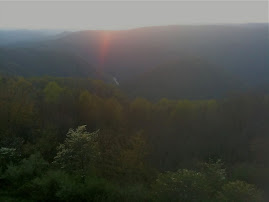
After several days exploring the southern slice of West Virginia, we ventured into the “real” mountains of the Monongehela National Forest, traveling on sketchy roads that vied with each other in packing in the most hairpin turns per mile, while going steeply up and over mountains before plunging into improbably remote valleys. Cell phone coverage was non-existent, and we even passed that most extreme test s of true rurality: we could put both the FM and the AM dial in seek mode, and never come up with a radio station.


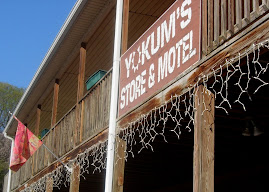
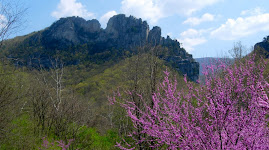
The other thing we discovered was that there were very few places to stay, and even fewer to eat. After rejecting a few motels that came right out of Deliverance, we ended up at Yokum’s, which had the advantage of being opposite some magnificent quartzite cliffs called Seneca Rocks. The only problems with this solution were that a number of very large men burst into our room several times since the owner had booked more than one party into the same room – the itinerant workmen were kind enough to move to the room next door; and the one restaurant we visited was so bad that the rib’ eye steak I ordered would have made a better shoe than a meal. It was an experience.


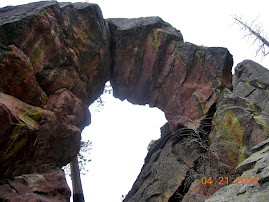
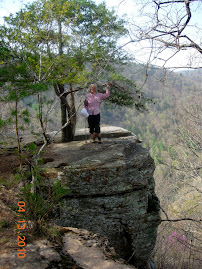
But the next day we got to climb to the top of Seneca Rock. Unlike the climbers from the mountaineering guide service next door, we donned neither helmet nor harness as we chose to take the trail to near the top. An easy scramble put us on top of the northern peak (on the left below), while cries of “belay on!) echoed from around the corner.


With Seneca Rocks under our belts, as it were, we spent our last night in the mountains at another delightful state park, high in expansive mountain valley (Canaan) that even had a ski area with a little snow left. Our main impression of the mountains was their soft beauty, and their relative isolation. It seems inconceivable that as I write this we are only 3 ½ hours by car from Washington, D.C. We have traveled into a dramatic fold in the landscape, and a major warp in the fabric of time.


Monday, April 12, 2010

The River Bend Farm - Intentional Community in Virginia

This trip is less about landscape than it is about friendscape. Our horizons are defined more by the extraordinary people with whom we have communed than the number of miles we have tramped.

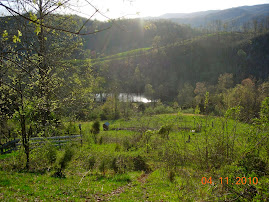
And in this spirit we went to visit our friends Peg and Jim on River Bend Farm, an intentional community nestled in the bends of the Clinch River in the extreme western corner of Virginia. Fernne and Peg had been grad students decades earlier, and we have forged ties over the years not only with Peg but her partner Jim, and Peg's sister and mother. They now live primarily in a remote corner of Scott County, Virginia, creating a community and restoring a farm in the folds of ridges and water that characterize the Appalaichans.

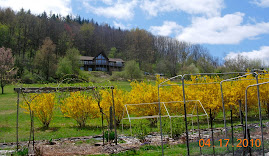
Jim gave us convoluted directions to the farm, but when we got the their road we doubted the accuracy of our transcription. It was a road in the Platonic sense, but a bit much for our rented Chevrolet Malibu. But after a few fits and starts - and some help from Frankie, a movie actor who is part of their community - we made it down the treacherous slope to their corner of this improbable farm tucked in a corner of the sweeping Clinch River. Their home - built by them with the help of their community - fit seamlessly among the cedar and forsythia and blue bells.

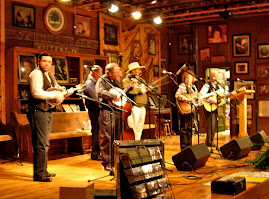
We spent most of our time walking over this marvelous place, with one excursion to hear a bluegrass band at the "Carter Fold", the product of the legendary family that made Appalaichan music the to ears of the entire country. But the heart of the experience was the soft and glowing hills and cliffs, and the sense of being in someplace both ancient and modern at the same time.

Their's is a sort of practical idyl, and this communal farm goes back to the activism of the Civil Rights movement, and the ongoing attempts to remedy the grinding isoltaion and poverty of these remote Appalaichan mountains. But the key is the sense of the community, that was as radiant as the trees exploding in new leaf with the intoxication of Spring.


Saturday, April 10, 2010

The Blue Ridge Mountains of North Carolina

With a little bit of help from American Airlines and Budget Rent a Car, we found ourselves teleported from rural Oklahoma to the Blue Ridge Mountains of western North Carolina. The trip started with a nostalgic tour of Chapel Hill, home of the University of North Carolina, where Fernne has lived for five years and Garth was born. But though the sign said "Chapel Hill", the crowded, over-built, and unlovely city that had swallowed the once charming southern city looked nothing like the place that Fernne had lived. We fled.

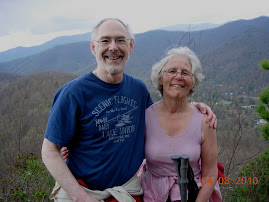
Our original destination was Asheville, a popular tourist and retirement destination at the western edge of the state, deep in the Appalachian Mountains where both the Blue Ridge Parkway and the Appalachian Trail inter-twine. But when our trusty iphone disclosed that Asheville has itself metamorphosed into a megalopolis, we followed our instincts and pulled off in the still rural town of Black Mountain. We found a delightful funky cabin built on the banks of the Flat River, and used this as a base to explore some of the peaks and trails that penetrate into these gentle but relatively high mountain ranges - topping out at about 6500 feet. The deciduous forests and dense rhododendron under-story are quite a contrast to the gnarly Cascades, and the signs of 500 years of European exploration and exploitation are refklected in the remnants of ancient logging railroads and mining operations.

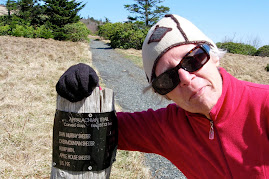
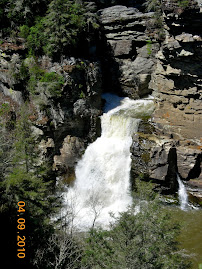
On our last day in this part of the Blue Ridge, we found a waterfall - Linville Falls - that almost rivaled Palouse Falls from the first day of our explorations. And then we finally got to walk up to a small peak on the Appalachian Trail itself, that 2000 + mile trail that runs up to Maine and is the eastern companion to the Pacific Crest Trail that has been such an important part of our lives for decades. These three days have been a very calming and peaceful interlude in what at times has felt like a bit of a frenetic escapade. And these gentle, old mountains suit our current stage of life.


Tuesday, April 6, 2010

Wewoka, Oklahoma - An Extraordinary Family Comes Home


Our trip has taken us the center of the nation to visit a family with whom we have a special bond: the Overstreets. Roy and Pauline Overstreet (nee Jones) were our friends and neighbors for many years in Montlake. Roy worked for NOAA as a physical oceanographer, and Pauline became a nurse supervisor in rehab medicine at the old Providence

The Overstreets brought an unusual personal history to our Seattle enclave. Their roots were in the thin red soil of rural Oklahoma; they started out as children of farmers who scratched out a livliehood in one of the poorest parts of the nation. The center of their physical universe was Wewoka, a town founded by the Black Seminoles after their forcible deportation from the deep south to central Oklahoma. The Seminole and Creek Indians had a complex and inter-twined relationship with the slaves of the south. The Trail of Tears, during which thousands of the deportees died after being expelled from their ancestral lands, ended largely in central Oklahoma.

Roy and Pauline’s ancestors were refugees in their own land, but they encouraged and prodded their children to excel academically, and they did. With the help of a few strategically fortuitous mentors along the way, Roy - an only child - and Pauline and her many sibs dispersed across the country and built families of their own, The Overstreets and their three grown children became our neighbors when Roy transferred to the NOAA lab in Seattle from his previous posting in Boulder.

We got to know their 3 kids – Frederika, Roy, and Marcie – and our families got to know each other over the years through bar mitzvahs and weddings. Frederika (Freddy), to our delight went into public health and then medical school. After finishing her medical degree she became a family medicine resident at the hospital in Seattle where her mother had been a nurse. Along the way she married one of her Peace Corps friends, who helped design and remodel Roger’s study (Gordon is now an architect, and he and Freddy have 2 kids of their own). And Freddy has now joined our faculty as a clinician based at Harborview, our county hospital.

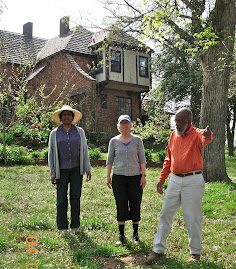
During this period Roy and Pauline decided to move back to their ancestral home, and bought a magnificent old house on a hill at the edge of Wewoka. Several of Pauline's brothers and sisters also clustered around Wewoka, bringing their urban perspectives and mastery of a more complex urban world to the town. This family influx has helped shake a few of the cob-webs out of this sleepy, inbred town. One quote we heard that was attributed to one of the conservative white land-owners in the town was: "This place was alright until the Overstreets showed up."

The Overstreet-Jones clan also did something that few of us ever do: they gathered in their family members and reconstructed their lives and their relationships. As I heard one of Paulette's brother say: "We invented the family that we never had." The warmth and acceptance and inclusiveness of this family went far beyond the friendship that grew on the streets of Seattle: by the end of the trip, Roger fantasized about buying the house next door and hanging out his shingle. Life refracts into so many shards, and this trip has helped coalesce some of these fragments into the glowing rainbow that this country still has the power to create.


Sunday, April 4, 2010

Lamb Fried in the Cattleman's Cafe - Intro to OK

Lamb Fries in the Cattleman's Cafe - Our Introduction to Oklahoma

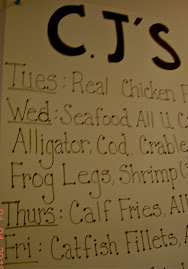
Two down and 498 to go. When we got off the plane from Denver in Oklahoma City, we looked for a place to eat before heading off to Wewoka (more about Wewoka anon). With unerring serendipity, Roger took an exit in the rental car to something called the Historic Stockyard District and, voila!, the Cattleman's Cafe appeared. Fernne recalled that this venerable establishment - oldest operating restaurant in Oklahoma - had appeared in the book Walter gave us, "500 places to eat before it's too late". But we couldn't remember what it was famous for.

When I sat ourselves down at the boisterous counter - Oklahomans are as friendly as the denizens of Irish pubs - the requisite delicacy was evident the moment we cracked open the very short menu- Lamb Fries. They are sort of the equivalent of Rocky Mountain Oysters in our part of the world, except the anatomical object involved comes from a hapless sheep and not a cow. Needless to say, Roger had the Lamb Fries while Fernne played safe with the chicken-fried steak.

And then, off to Wewoka!

Friday, April 2, 2010

Bad Planning - Good Outcome

Today was our first layover day, which meant we could stretch our legs. Finding ourselves in Grand Junction, Colorado, on a glorious spring day, we headed for the Colorado National Monument. This gem is a sort of mini-Zion on the outskirts of Grand Junction: fanciful towers, improbable vistas and - mirable dictu - no people. (This turned out to be a blessing and a curse).

After some flailing about looking for the trailhead, we set out on the Monument Canyon trail, a climbing path that transects the park. Our intention was to go half-way, and then head back. But somehow the crisp and sparkling day, the increasingly glorious trail, and our disobedient legs kept going past the turn-around point. In fact, they took us to the canyon's rim, 6 miles slog and 2000 feet up. Oh, well - we figured we could easily hitch-hike back to the car, about 13 miles by road.

WRONG. There was virtually no traffic going the way our car was parked. After staring at each other and the empty road for 15 or 20 minutes, Roger set off at a fast pace downhill, hoping to hit the visitor center - 6 miles - before it closed. We figured that Fernne's winsome form would do better at hitch-hiking alone.

But as Roger walked on - eating snow because he was out of water - no one appeared. Just before the visitor center closed - Roger was close - a large SUV pulled up with 5 people in it - and Fernne in the way-back. Saved by a Grand Junctionite squiring Austrian tourists. We made it back to the car, and stopped in town for celebratory drinks.

So tomorrow we are off to the Denver airport and a quick trip to Wewoka Oklahoma to visit our wonderful friends and ex-neighbors, the Overstreets. More to come!

Brigham City's Finest Pie

Brigham City's Finest Pie

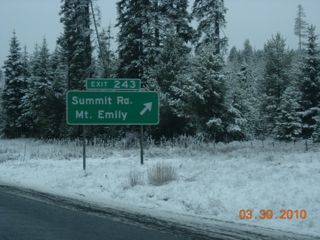
The Blue Mountains-In the Snow

The Blue Mountains-In the Snow

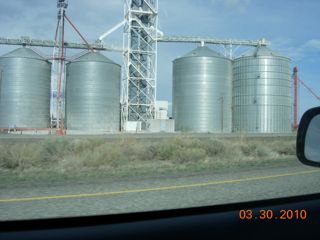
Silos from the care at 80 mph

Silos from the care at 80 mph

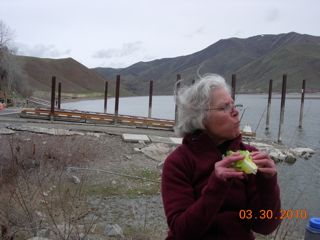
Fernne at Farewell Bend, Snake River

Fernne at Farewell Bend, Snake River